
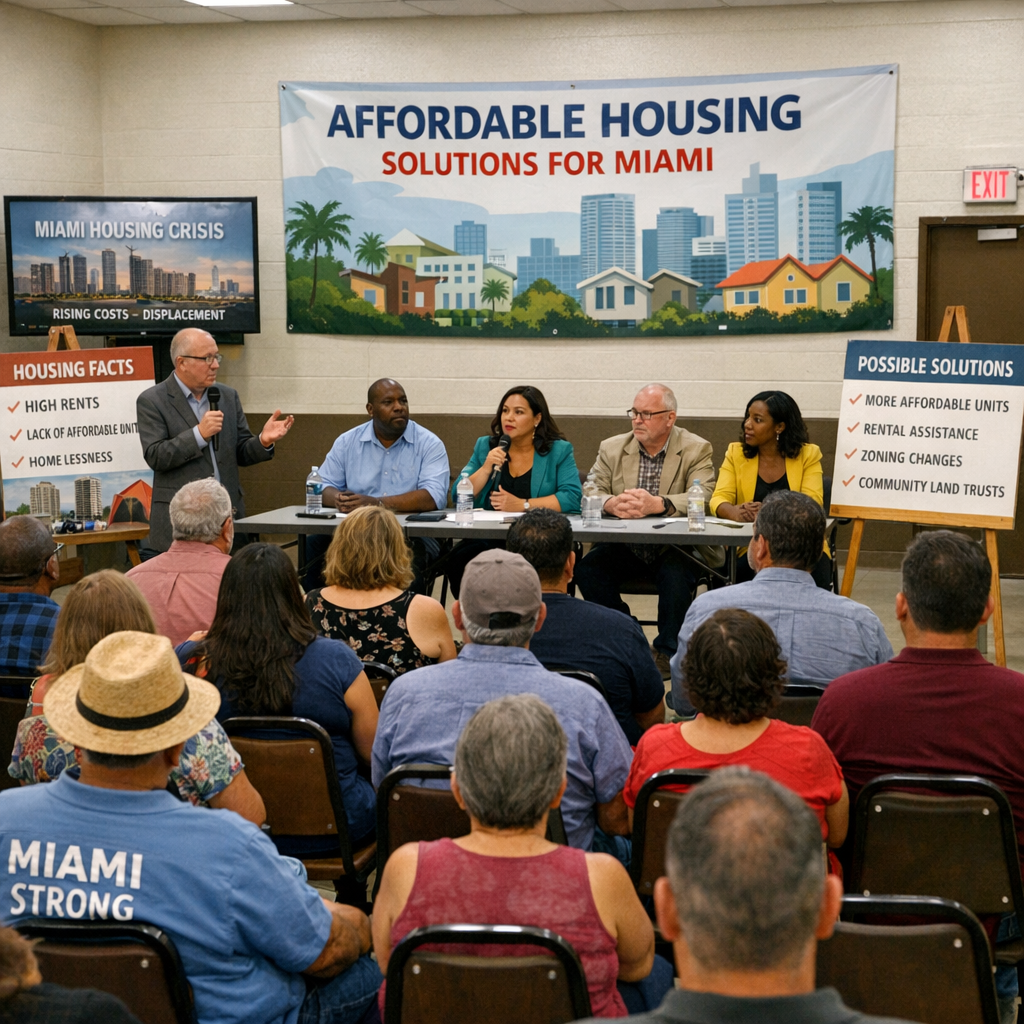
Miami’s housing crisis continues to be a pressing issue, with a significant portion of residents struggling to afford basic necessities. According to United Way Miami’s 2025 ALICE Report, over 527,000 households in Miami-Dade County are either living in poverty or unable to meet basic needs—a rise of nearly 40,000 households since 2023. This underscores the growing financial instability among working families in the region.
Community organizations are actively working to address these challenges. The Miami Climate Alliance, a coalition of over 135 neighborhood-based organizations, focuses on issues such as affordable housing, clean energy, and climate gentrification. Their efforts aim to ensure equitable access to resources and resilience against climate-related displacement.
Similarly, Catalyst Miami emphasizes the importance of public policies that meet community needs and distribute resources fairly. They advocate for economic justice, health justice, and participatory budgeting to empower residents in decision-making processes.
Despite these efforts, challenges persist. In September 2025, Miami-Dade County commissioners approved a $12.9 billion budget for the 2026 fiscal year. While this budget maintained property tax rates and canceled proposed increases to public transportation fares, it faced criticism for potential cuts to community programs. Nonprofit leaders and residents expressed concerns that reduced funding could adversely affect essential services for vulnerable populations.
Additionally, the definition of ‘workforce housing’ has been a point of contention. People Acting for Community Together (PACT) has highlighted that current definitions allow for rents that are unaffordable to many residents. They advocate for recalibrating income calculations to better reflect the financial realities of Miami’s workforce and to prevent displacement from neighborhoods.
As Miami continues to grapple with its housing crisis, the collaboration between community organizations, residents, and policymakers remains crucial. Addressing systemic issues and implementing equitable solutions are essential steps toward ensuring that all Miamians have access to affordable and stable housing.