

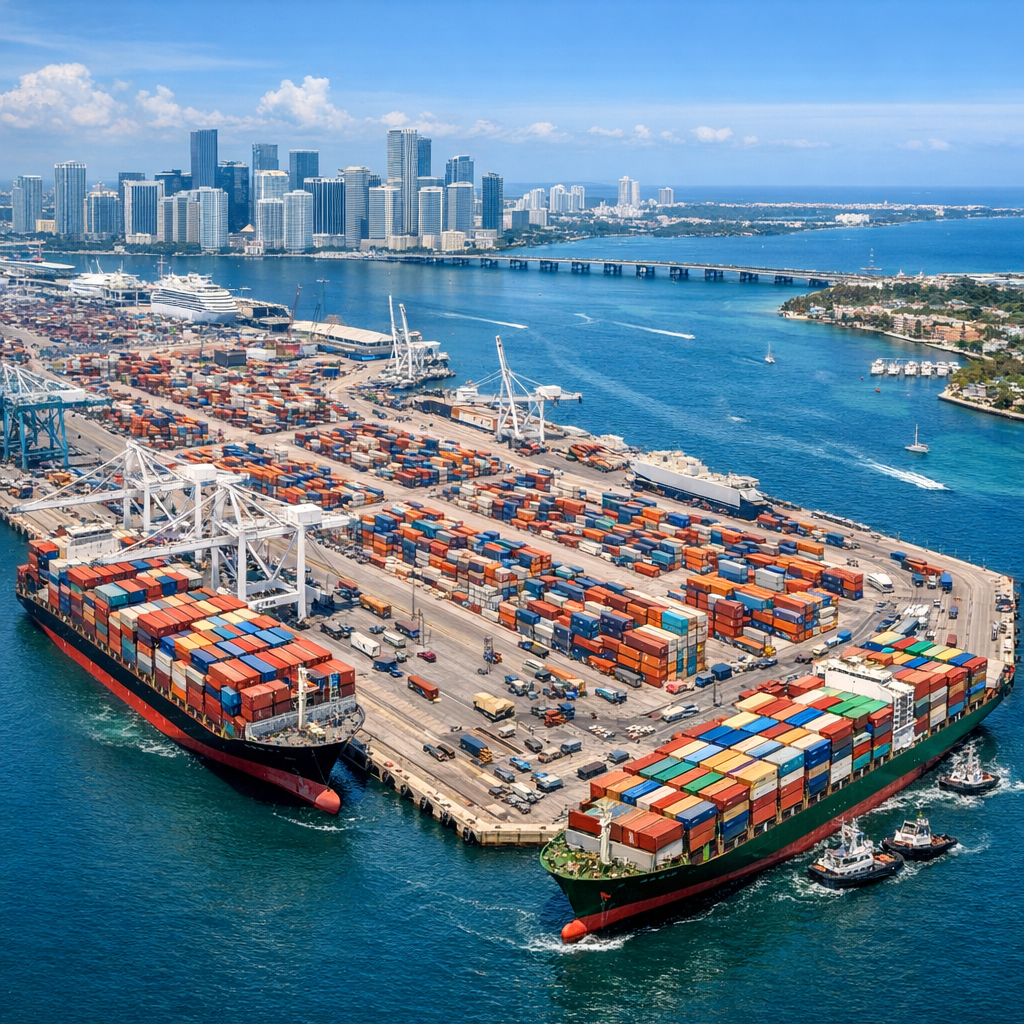
Miami’s unique position at the crossroads of North America, Latin America, and the Caribbean has transformed it into a central hub for global commerce. This strategic location, combined with world-class infrastructure, has enabled the city to play a crucial role in international trade and logistics.
PortMiami: The Cargo Gateway of the Americas
PortMiami stands as a testament to the city’s maritime prowess. Handling approximately 9.7 million tons of cargo annually, it serves as a vital conduit for goods moving between the United States and international markets. The port’s efficiency and capacity have earned it the moniker “Cargo Gateway of the Americas.”
Miami International Airport: A Leader in Air Cargo
Complementing its seaport, Miami International Airport (MIA) is a leader in air cargo operations. In 2023, MIA managed $74 billion in trade, processing 2.27 million tons of cargo. Notably, the airport dominates the U.S. market for perishables, handling 91% of all U.S.-bound flowers and 65% of perishables, with significant contributions from countries like Colombia.
Foreign Trade Zones: Enhancing Competitive Edge
Miami-Dade County is home to over 300 Foreign Trade Zones (FTZs), offering companies the ability to manufacture, assemble, or reconfigure goods while deferring, reducing, or eliminating duties until products enter the U.S. consumer market. This framework provides significant cost savings and competitive advantages for businesses operating within these zones.
Multicultural Workforce: Driving Global Trade
Miami’s diverse and multilingual workforce is a cornerstone of its success in international trade. Professionals in customs brokerage, freight forwarding, international banking, and logistics bring a wealth of expertise, ensuring smooth cross-border transactions and efficient supply chain management.
Resilience Amid Global Challenges
Miami’s trade infrastructure has demonstrated remarkable resilience, even during global disruptions. For instance, in 2020, amidst worldwide supply chain challenges, MIA handled an unprecedented 2.32 million tons of cargo, underscoring the city’s capacity to adapt and maintain its pivotal role in global trade.
In summary, Miami’s strategic location, robust infrastructure, and skilled workforce have solidified its status as a global trade powerhouse, effectively connecting continents and fostering international commerce.